Tuesday, December 4, 2018

Pupcakes: Annie England Noblin

Pupcakes: Annie England Noblin
Genre: Chick Lit
Pages: 364
Published: 2017


Brydie Benson's life isn't going so well. She's living with her best friend and is reeling from a bad relationship. So when she gets the chance to start over, she gladly takes the chance. She gets to live in a great house, rent free, as long as she takes care of the owner's dog. She takes a job in a bakery, and off she goes.

On the path to rebuilding, she meets many people along the way, including a handsome doctor, people at the dog park, and Pauline, the owner of the dog and house she's taking care of with a mysterious past. Soon the puppy becomes a bigger part of her life than she could have imagined and even finds that she is a great baker for pets, gaining her popularity in the pet community. Maybe starting over isn't so bad after all.


Sometimes you just need some indulgence, although this book wasn't perfect. 

First off, my copy wasn't proofread. There were glaring mistakes on the back cover and throughout the book (Nathan wasn't a veterinarian, but a doctor). That's stuff that should have gotten past editing easily. 

Secondly, this is barely a Christmas book, so don't judge the book by its cover. Very little of it takes place at Christmas, so you can read this any time of year. Actually, I'm not sure why I waited so many months to review it. This really isn't a holiday book, though it does briefly do some things with Thanksgiving and a little Christmas. 

Thirdly, there wasn't much of a "storyline." Not necessarily a bad thing- some of my favorite books don't have solidly solid plotlines. But in Pupcakes, the conflict doesn't stem from any external or internal issues; rather, whenever the author wants to include conflict, she just has Brydie get angry for no reason. Sometimes I just didn't like her very much. She and Nathan don't speak for weeks after what seemed, to me, a very minor argument. I would have liked to see conflict drawn straight from the plot instead of created on the spot. 
Also, because some things are so easy for Brydie (she gets a job right off the bat; she gets to live in a great house rent-free), there's just not as much tension as there could be. This is definitely an escapist "live in another character's world for a while" story, similar to a few Jenny Colgan novels I read this year. Thus, there isn't always much of a focus. If I had to choose some, Brydie doesn't love everything about her life. She envies her best friend with a child and another on the way. She wants to get over a past relationship. So I guess it's about that: starting over and fixing the things that pop up. 

Fourth, this is chick lit and there is a predictability factor. The old lady with failing health, the bakery, the relationship, finding secret letters and memories in the basement of an old house, etc.  What I enjoy, though, is that things usually don't get resolved in an extremely predictable manner. More bothersome to me, though, is that some of the issues that come up get resolved WAY too quickly or are so small but the characters are making a huge fuss about them. Brydie repairs her tense relationship with her mother (and Nathan, which really didn't even need repairing to begin with) so fast it's unsettling. Apparently all it takes is a few lines of dialogue. Oh, yes, and there's a missing father too of course! Gee, I'd never seen that before...only in every other book I've read in the past two years with a female lead. Can books please find other ways to convey strained relationships with parents? Fortunately, it's not a major point in the plot. 

Still, I enjoy books that detail characters going through their life and growing as people. Pupcakes does a good job of mirroring real life character development. If you like that kind of thing, you'll enjoy Pupcakes for sure. Readers who are looking for deep literature with lots of thought-provoking questions should look elsewhere. Hallmark fans, on the other hand, will be right at home here. The book's Goodreads audience, who primarily fall in that camp, has given it many strong ratings. As for my perspective? It needed more conflict and it was a little too sappy at times. Still, it's a relatively enjoyable, cozy story and I don't regret reading it. 


3 stars


Sunday, December 2, 2018

Big Little Lies; Liane Moriarty

Big Little Lies: Liane Moriarty
Genre: Chick Lit/Domestic Suspense
Published: 2014
Pages: 486 in the large paperback version

Multiple ABTP Award Winner:
An Adventures By The Page 2018 Best Book Nominee & Winner
Best Chick Lit 2018
Best Writing 2018
Character Development Award 2018


What happened the night of the school trivia contest? Was it a cold-blooded murder? Or just an argument gone very wrong?

When Madeline meets Jane by accident one day, the women's lives will intertwine. On the surface, they seem to lead other lives. Tough Madeline has the standard family and a sharp tongue, but uses it for good (usually). Celeste is beautiful, rich, and the mother that everyone wants to be. And plain Jane is young and insecure, and eventually taken under Madeline's wing. Jane's life only becomes more difficult when her son is accused of doing something terrible in his kindergarten class, and the victim's mother is having none of it. Soon drama among the parents begins to escalate, and it will culminate in a fundraising night that nobody will ever forget. 


Hey, look who's back from hiatus! I haven't read much in a while, I confess. So I thought I'd finally get around to reviewing this one, since it's a nominee for the best book I read in 2018.

Let's start there. Why was this book as good as everyone says it was? For starters, the characterization is great and I was fully immersed in their lives. Everyone had a personality, yet their individual quirks were never shoved in our faces 24/7. Nobody was a caricature or cardboard cutout. Also, the blend of the serious, the daily, and the just plain silly is done really well. Add in some great plot twists, and it's as good as any thriller. Part of this novel is definitely suspenseful, and the buildup is fantastic. We get to hear excerpts of conversations from other parents about what might be going on. They don't always play major roles in the book, and they're still well-drawn. Every one of them.

It satirizes parental drama, yes. And it does a great job. Parents having parties just to leave kids out. Kicking sandbox sand at each other and having the others run away to "tell" on them like they're also little kids. Yes, "mean girl" (who is actually a mom) Renata is a little corny. She has cronies, which are also a little corny. However, they're still more real that the popular girls I see in teen books. They just want the best for their kids.

But it touches on so many other things too. There are subplots of domestic abuse, which seems like a standard trope lately, but to be fair this came out before most others in that vein did. So I can't and won't nail it for that. The characters learn to come to grips with the past and learn to stand up for themselves. So there's a lot of growth to go along with the messages. I don't consider myself a super-feminist, but feminists will find something to like here. It's not necessarily over-the-top preachy, or a SJW Tumblr post. Instead, what we have here is very real. From the point of view of one character, I could even understand why someone wouldn't want to leave an abusive household and found that I was empathizing with them. That's not something that, given I've never experienced it, have realized. Isn't the point of reading to learn about others and understand each other? The feminism points were also much easier to swallow given that they weren't Internet posts full of f-bombs and accidentally promoting intolerance in the name of tolerance. If you're sick of Tumblr, this book is a breath of fresh air.

Abuse isn't the only domestic issue explored, either. Madeline's daughter loves her ex-husband's wife more then she loves Madeline, and we watch her deal with that. I really felt for her! In addition, Jane has to deal with scrutiny from other parents at an early age and with catty parent behavior. Cue gritting of teeth and a rant about why we can't be so quick to judge. And then Celeste's demons are something else entirely. Yeah, yeah. "Beautiful and rich and her life isn't as great as we want to believe!" It's been done before. Still, I haven't been able to relate to and consider someone's situation like that on the same level as I do with Celeste.

The thing is, though, it that it's also lighthearted and funny. I'm not a parent, but Moriarty seems to have nailed what daily life is like. Kid fights. Just trying to get it all done. Dealing with your social justice-centered child who is going to extreme, inappropriate measures to help out. Helping kids with school projects. Witty quips and "it's funny because it's true" moments made me laugh out loud, and were a great counterbalance to the dark themes. Because life doesn't stop when drama arrives. It goes on. It continues. That's what's great about Big Little Lies. 

This isn't just an entertaining book, but it will teach you things. It's fun to read and if you're like me, you'll go through wondering, "Which of these lovely ladies is going to die at the end? Noooo!" Fortunately, if you're worried about the concept of a murder mystery and if that type of thing should be considered entertainment (also me), you need not worry, and you'll see what I mean when you finish. When it comes to domestic suspense, this is one of the most entertaining there is.


5 stars

Wednesday, October 31, 2018

How to Get Kids to Not Hate Reading (as told by a former student)

Trust me when I say, I know. I'm not a teacher, but I was a student and book blogger, and there are right ways and wrong ways to get kids to love reading. This isn't your grandmother's English class anymore.

Here are some of my own thoughts. Disclaimer: I am not a teacher. But if you've been in school for twelve plus years, I think your opinion should be considered valid.


Don't assign summer reading for the sake of giving summer reading.
This is really annoying, just like giving homework so the kids are busy at night. Unlike math or history facts, reading skills aren't as likely to leak out of your brain out of the summer. It's like riding a bike; you can't forget.

I once read an embarrassing moment section in the magazine where the girl in question had to read a big pile of books over the summer. On the first day of school, they were given a test on the books. And the reason for this assignment was...what? 

One summer, I was asked to read a book over spring break. When we came back, we had to do a project where we pretended to be the characters over social media. It might have made more sense if  it had anything to do with the class material, but neither the book nor project had anything to do with what we were learning in class. In fact, it actually took time away from what we were doing. So why did I have to spend time doing all that work? Another time I read a book over the summer only to find out that whoops, the teacher forgot it was on the reading list. Yet another time, when I was in high school, "book groups" were an orientation activity. We had to read an extra book over the summer just to talk about it for 15 minutes as an orientation "bonding" activity. Confession time: I skimmed my book. And that's coming from a book blogger who likes to read!

Seriously. If there's no reason for a summer assignment, don't give them. This is probably the #1 reason that I see reading hate, and that includes me. I really feel like teachers should know better. (But if you are a teacher and there is a reason for this I'm missing, please feel free to share in the comments.)

If you do give summer reading, have it connect to something important, like a history concept you want to drive home for the upcoming year. There should be a practical reason for doing it. Giving kids homework is not a reason.


Host fun reading events.

In school, we had lots of independent reading time. We once had an afternoon blocked out where we could bring blankets, pillows, hot cocoa mugs, and a book of our choice for an afternoon of reading.  We were also big proponents of the book fair and better yet, the book order. I look back fondly on that day, when I brought "Super Diaper Baby" along with a pillow and had to try super-hard to keep myself from cracking up in front of the class. 


Don't censor your child's reading.

Hearing about helicopter parents hand-picking every book their child reads saddens me. Junie B. Jones using "too much bad grammar" is a big one. Oh, no! Characters are making mistakes, making totally understandable errors for their age, and aren't perfect! Isn't the point of reading to watch characters develop? What kind of message are you sending when you explain that you don't want them reading a book because the character makes mistakes? Also, I have rarely seen a book influence a child's behavior. It's really unlikely that they're going to squeeze ketchup packs under the toilet seats at school because they saw Captain Underpants do it. A shy girl probably won't start shouting in class because she saw Junie B. Jones do it once or twice.

And if, for some reason, they do act out because of a character? You just explain to them why it's not a good idea and hopefully they won't do it again.

Also, when you pick your child's books, reading becomes a chore. If you force your kids to read certain books, they're not going to love reading as much. If they get to read about things they love, they'll find themselves wanting to read more and maybe even explore other reading realms. Sounds like a no-brainer. Which leads to my next point...


Let kids pick their own books, to an extent.

You can apply many reading practices to just about anything you read. However, that doesn't mean you should eradicate the classics entirely. You don't want to create the impression that all fun reading is work, either.

ADDENDUM: I get that if people want an English education, they should read some classics once in a while. Even so, use ways to make it more fun. I heard of one local teacher who once showed Psycho in class and then they compared it to Oedipus Rex. This isn't your grandma's English class; find ways to have some fun.


Get engaged!

Many modern books talk about relevant issues that make reading fun. Have debates. Have book club chats with activities and "conversation starters" that actually make it feel like a book club. Make board games instead of book reports...though again, I understand that sometimes essays are unavoidable. 

You can do this with classic novels too. Make the issues at hand relevant to your students (admit it, I bet even you weren't thrilled by all your English books). Stage dramatic Shakespeare readings and spend some time looking up Shakespearean insults. Yes, those exist.


Say nay to heavy annotating.

At least partially. It's a ton of work, you guys, and it's probably the #2 reason why school kids get turned off by reading. It took me at least twice as long to read a book because teachers wanted to see lots of annotating on every page. I didn't have that many thoughts and would have to spend time making stuff up, or force myself to create questions. Why not have kids jot down 2-3 interesting discussion topics or observations instead? Things that they REALLY want to discuss instead of just doodling random remarks and questions so there is evidence they did the work. Quality work should be more important than evidence of doing it. 


Reading should be fun and enjoyable. The goal of many people is to get kids to love reading, but some of the ways that it's being done don't do much to achieve that goal. 

So have fun with it! Get involved! Read cool things! Take chances! Make mistakes! Oh, wait, that's Ms. Frizzle's saying. (Hey, there's an idea...watch the book's movie in class! That's another thing you could do.) 


Wednesday, October 17, 2018

Why I Disagree with Feminist Challenges of Disney Fairy Tales

Recently Keira Knightly was on the Ellen Show. She was talking about her three-year-old daughter and how she was allowed to watch any movies she wanted...with some exceptions. Basically Keira believed that The Little Mermaid and Cinderella are bad because "Ariel gives up her voice for a man and Cinderella waited around for a guy to save her." She went so far as to ban the movies from the house.


Unfortunately, in today's extremely wanting-to-be-politically-correct world, a lot of people are taking the same mindset. I think that's really sad! Let's think about this for a minute.

First of all, let's consider the context of when these stories originally came out. Fairy tales often served as stories that taught lessons when they were first written; oftentimes they served as warnings. Feminism wasn't exactly alive and kicking back then; if so, it was on a considerably smaller scale.  So they're not meant to be huge political statements. Especially the Disney versions. Considering that Cinderella came out in 1950, it makes sense that there probably won't be a lot of feminist messages. But so what? It's a good story. I liked it as a child. I couldn't care less about Cinderella's role in the home at age 4. And even so, can we please stop making the term "housewife" offensive? Many women choose that lifestyle and they do a great job with it. It doesn't mean they aren't ambitious or are passive.

Second, we need to actually pay attention to the stories. Since when did Cinderella have any desire to meet a guy to take her mind off her problems? All she wanted was to go to the ball. Sure it's possible that she wanted to meet the prince. Come to think of it, I'm not even sure that it was mentioned to Cinderella that the purpose of the ball was for the prince to find a wife. Mostly she dreamed about having a dress and taking time off from her tyrannical stepmother and stepsisters.

Now, Arial. Arial expressed an interest in being human long before she discovered Eric. She had a whole grotto filled with human treasures and a seagull friend that she talked to way before she actually had a love interest. And we know that she's bored of living under the sea when she sings about it...again, before she discovers Eric. She didn't give up her voice "for a man." She wanted a better life and was willing to take the risks...smart choice or not, you can decide for yourself. While there may have been some symbolism there, Ariel had plenty of motivation to want to live on land.

Still, some people say that Disney princesses are passive. I think this idea has actually gone by the wayside lately, but let's recap anyway:

Pocohontas tried to bridge a gap between two cultures.
Mulan saved China.
Jasmine refused to let others decide her future.
Merida had no interest in arranged marriages and wanted to decide her own future. She was also an excellent athlete.

Cinderella had qualities of her own. She was brave and didn't lose hope. She believed in the power of dreams and good friendship. She loved others as she loved herself. And yet I'm supposed to believe she's a bad role model?

Finally, you don't have to agree with a story to enjoy it. But I honestly don't believe these movies were telling girls they have to wait for a man. I never got that idea as a kid. I never got the supposed "message" that the creators of Barbie were trying to get me to be skinny either. They were dolls I enjoyed playing with; that's it. Unlike their parents, little kids take things at surface value. Even if they do think that being saved by a prince is nice, they won't go their whole lives thinking that. A little girl isn't likely to go into her twenties thinking, "A man has to save me. I learned that from Snow White when I was six!"

Not every story needs to be politicized and overthought. That kind of mindset can ruin stories. Often in the case of today's fairy tales, they're escapist stories to be enjoyed. I will be sad if little girls and boys don't get to grow up seeing movies like these; they're classics. And sometimes they're not meant to be any more than that.


What's your favorite fairy tale or Disney movie? Does it ever get challenged?

Monday, October 15, 2018

Halloween Books for Young Trick-or-Treaters

Looking for some Halloween fun for the young trick-or-treater in your life? Look no further. These are the Halloween books I enjoyed in my childhood and hope you'll like them as well.


Arthur's Halloween; Marc Brown

I honestly like the TV show better than the books, but the books are good too. In this one, D.W. wanders into the local witch's house and Arthur has to go find her. It has a lot of the "old Arthur" charm, plus it's a spookified introduction to the Tibbles!


Corduroy's Halloween; Don Freeman

Follow Corduroy and his stuffed pals as they pick pumpkins, decorate windows, and find the perfect costume that all ends in a great Halloween party. I loved the colorful illustrations at Corduroy's costume party. It's a fun book even if you're not a Corduroy diehard and the lift-the-flap aspect is cool too.


Lulu Goes to Witch School; Jane O'Connor 

Lulu Witch is excited (but scared too) to go to school and just as excited about the new spider dress her mom made her. But can she survive the class bully? It doesn't help that Sandy Witch tries to be better at everything! 


Two Little Witches; Harriet Ziefert 

When two little witches go trick or treating, anything can happen. It's a trick-or-treat tale where readers will meet new kids wanting to trick-or-treat with the rest of the group. Soon the witches meet pumpkins, pirates, and more. How big will their group get? Vibrant illustrations only add to this fun counting adventure and are arguably the best part. 


Purple Pickle Juice; Erica Farber & J.R. Sansevere 

Thistle Howl wants nothing more than to grow bigger. Every day, she drinks purple pickle juice and says some magic words, but to no avail. Will Thistle ever be able to grow? Maybe with the help of a family member...


Harry Potter and the Sorcerer's Stone; J.K. Rowling

Now this may be too much for many who still read the books on this list. But for the youngest of trick-or-treaters, this one could a good read aloud. It doesn't get too scary until the very end. In case you still don't know, this is the story of a boy who one day finds out that he's a wizard and has been accepted to a great wizarding school. Although the mystery of who is trying to steal the Sorcerer's Stone is a common theme, it doesn't take up the whole book and a lot of time is spent on the magical elements of Harry's world. At Halloween, they are enjoying a great feast when suddenly a troll breaks in and they must save a classmate from it. Be sure to check out Chamber of Secrets, too- Harry gets to spend Halloween at a ghosts' party. 


The Monster at the End of this Book; Jon Stone

You have to love this book no matter what time of year it is! Poor Grover is hearing rumors of a monster at the end of the book. So he's going to try as hard as he can to prevent you, the reader, from turning pages to avoid seeing the monster! It's fun, unique, and comes with a funny surprise ending. Don't forget to buy the version with Elmo.


Little Witch Goes to School; Deborah Hautzig 

Little Witch wants to go to school with her friends, though her mom would rather her learn from her two terrible aunts. Finally she agrees to let her try school.. if Little Witch behaves badly enough. But Little Witch has a much easier time being nice than being mean. Can she pull it off?


Little Witch's Bad Dream; Deborah Hautzig

Little Witch's cousin Bossy has come to visit, and in true Little Witch fashion, tries to make everything nice for her cousin's visit. So one night she has a dream about turning her to garbage...but was it really a dream?


What books did you enjoy bringing out at Halloween when you were a young trick-or-treater? 


Tuesday, October 9, 2018

Twisty Tales for Your Halloween


It's Halloween time, so it's time for scary stories!

Admittedly I don't love scary stories, especially movies. For one thing, I don't think murder should be classified as entertainment. For another, some horror stories get downright corny. Evil clowns and baby dolls just don't scare me because, well, they're not real. (Actually, my step-grandma has a house FULL of antique dolls. I mean literally FULL. So I completely understand how they can be terrifying. The evil clowns and monsters, however...) So I stick to the psych thriller genre, and there is some very good stuff there.

Here is my journey into my foray into the genre over the past year or so.


First up is The Hypnotist's Love Story by Liane Moriarty.


I come across this one unexpectedly at the bookstore one day. The concept excited me because it wasn't a traditional horror story. It's a "starter" story about a woman who enters a new relationship, only to find out that he has a stalker. The suspense was super here, because you never knew who she was or where she was going to show up. What made it not as good as it could have been were the multiple attempted subplots that cluttered the second half. They really distracted from the premise and I didn't really care about most of them, particularly the missing father. Still, this was an exciting one.


Wanting more, I moved onto another Moriarty novel, Big Little Lies.

Now this one does end in probable murder, but if you have qualms about that I wouldn't worry. It's not offensive. You'll see after you read it. It starts after someone is killed at a fundraising event at the elementary school and then starts from the beginning. Young mom Jane's son is accused of attacking another child, causing some mama drama that gradually escalates. She and her friends must grapple with it through the coming year. It also proves that thrillers can be serious with its messages about domestic violence. I did find the climax to be rather, well, anticlimactic.


The next one was The Wife Between Us.

Now, I may have been new to the genre but WOW. What a twist! And there were several! This one I enjoyed thoroughly and kept thinking about. I can't speak for aficionados, but maybe they will like this anyway. I haven't reviewed it yet because it's hard to talk about the story without giving things away. If you want a suspenseful thriller without murder, this is a must read.


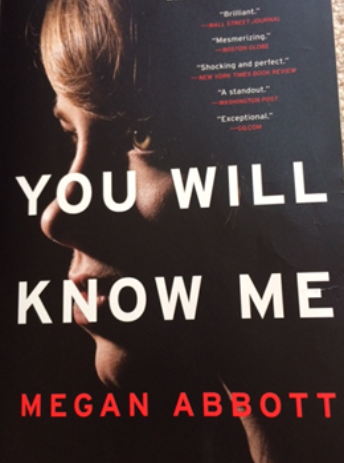
Wanting it slightly darker, I moved onto You Will Know Me.

I like reading about the lives of those I don't know. In this case, gymnasts. A death rocks the gymnastics community just as the Knox family is preparing to send their daughter Devon to trials for the next level, hoping to eventually send her to the Olympics. I'm sorry, but the writing was just plain bad here. The author goes off on tangents, uses very repetitive language, writes sentences that are half a page long, and multiple other things I disliked. Plus the twist is very easy to guess once you get past a certain incident, even for bad detectives like me. This book got HEAPS of praise and I really can't understand why at all. But if you like don't mind language, feel free to give it a try....


I was hoping for something better so I tried Never Let You Go.

Our protagonist was abused by her then-lover, and he is out of jail now. She believes that he is out to get her again, so she signs up for a defense class. But is he really after her, or is a dark secret throwing its effects on her life? It's good, but nothing special. There are only so many suspects here, but the suspense is good. Definitely better than Abbott's novel.


While browsing the bookstore, I then picked up the hidden find that was The Secret Room.

Fair warning: this is actually a threequel. It can be read on its own, but once you read it you won't need or want to read the first two. Anyway, the premise is that a psychiatrist begins working at a prison and then someone or something starts killing her patients. She might lose her job if she doesn't get to the bottom of things. It's a unique story and the added bonuses of wacky patients and a prison setting make it even spookier. I liked this one. But yeah, it has the same "sudden twist" [not the major twist] that many books have when they feature a female lead. Actually, I think at least two other books on this list have the same twist! Maybe authors should find new ways to change someone's life?


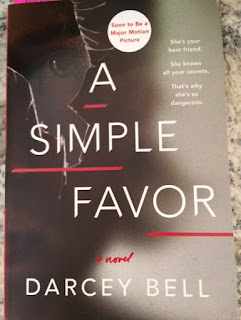
I thought I'd take it a step up and moved on to A Simple Favor.

This one didn't grab me. Basically this woman agrees to pick up her friend's kid from school and the friend doesn't return. The reason for the main character's disappearance is revealed halfway through, and there are no consequences for anyone involved. Okay, so presumably I read for the sake of finding out the consequences, but then there are none, so...waste of time. There is also incest for no reason than entertainment. Um, EW. Did I mention the characters were completely unlikable, Bell utilizes a ton of cliches, and that the climax is inspired by/stolen from a popular movie? I rated this three stars; it should have been maybe two.


The last one I read was The Other Woman.
Currently Reading (and quite possibly my next review):

A simple premise: a woman's future mother-in-law wants her gone. She loves her fiance, so she keeps going, but that's hard to do when Pammie is making you look like the bad guy. I could see the red flags in this relationship sticking out like sore thumbs, so while I didn't entirely guess the twist (I think it crossed my mind briefly once or twice) it didn't blow me away either. I also think the characters could have been more interesting.


Not all scary stories are so very terrible. A lot of them actually come with good messages and aren't just "killing for fun." I actually prefer the domestic thriller vein myself. So if you're looking for something different this Halloween, try one of these books.


Do you prefer thrillers or horror stories? Any suggestions?

Friday, September 28, 2018

The Other Woman: Sandie Jones

The Other Woman: Sandie Jones
Genre: Suspense
Pages: 294
Published: August 2018


Adam and Emily adore each other. They're going to get married and start a life together. But one thing stands in their way: Pammie. Pammie is Adam's seemingly sweet mother, and Adam would do anything for her. Then when she meets Emily, she'll do anything to make her go away for good. And when Emily tries to point out how manipulative Pammie is, Adam doesn't believe her. 


You know the type: the standard thrilling novel with a relationship gone awry. This book includes both of these things. But this time, much of the dysfunction comes from the relationship with our protagonist and her mother-in-law. I thought that was an intriguing idea! So many people think of it as a difficult relationship, but to make it into a suspense book was an idea that makes me wonder why I hadn't thought of it before.

Readers familiar with the genre will recognize some of the elements. The characters are standard, so much so that I wish there was a little more variety. Emily herself is pretty bland. Then she has her typical best friend who serves as a shoulder to cry on and a party person. She also has a male best friend who is, naturally, gay. I doubt it would have hurt to break from these tropes a little bit, but that's a minor complaint. Because I did still like these characters.

What I had more issue with was getting into the story. These characters drink. A lot. Half the story is spent drinking, often in bars, and that's how the story starts off, with Emily meeting Adam at a bar. SPOILER ALERT (highlight): Emily even drinks when she's pregnant, saying "times have changed." Wait, we're living in some alternate universe where suddenly alcohol is okay for babies? That's not really a "trend." You don't drink while pregnant because it's socially acceptable. That's not a thing.    It's not very exciting and I wondered if I was going to finally find a book that I would DNF. The first chapter, mostly, could have been cut. Fortunately, the suspense picks up. Notice the word "suspense." It's more suspenseful than it is thrilling, hence why I picked that genre.

First, a little on the main romantic relationship. That's not exciting either. Emily and Adam don't seem to have a lot in common. Adam can be quite firm with her, especially in regards to his mom, and I saw the red flags appearing not long after the beginning. Emily wonders why people commit so early after they meet, yet that is exactly what she is doing. The only thing they really do to bond is engage in intimate evenings. This they do almost as much as they drink. Thriller aficionados might see where this is going.

Now to the suspense itself, which was good. The heart of it all: Pammie. (US readers: did anyone else catch that her husband's name was Jim?) She does a lot of things to make her seem like the good guy in front of everyone else, while making complaining Emily look ungrateful. Even I was questioning who was right and wrong. Pammie tells lies to make it seem like she is suffering. But is she truly lying, or is Emily making her out to be that way? And what really happened to Adam's former girlfriend, Rebecca? You will begin to make assumptions; not all of them will be what you think. That is one of the underlying questions throughout the story. A subplot involving Adam's brother also takes the stage when Pammie accuses Emily of cheating with him...and not unjustly so. Of course there's a double standard of sorts when Adam appears to be doing the same thing. Hmm...

If anything lessened the suspense just a little, it might have been the transitions themselves, or lack thereof. We'd suddenly be years back in time with no warning, and then eventually this sudden flashback would give way to the present again. I had to reread in a few places to make sure I was on the right track, or to clarify where the story was taking place. There is also an instance where the book jumps forward about seven months. If anything happened with Pammie in that time, we don't know about it. But that also seems like a long time for her not to have done anything. I wish Jones had established the settings and time periods a little more. I couldn't always tell when the book was taking place, or what characters were doing, or where they were. Some of the "reveals" seemed a little forced to me as well. These are often done by characters giving every detail about what really happened, like they are being questioned.

As for the twist, it's similar to others that I've read recently. Still, I didn't guess it entirely and it makes sense. The twist makes a lot of sense after you piece it together, but the issues that are touched on have been overdone in this type of story. SPOILER (highlight): Themes of domestic violence appear again. It's been done before. Yes, the twist works well. But I wonder if a different angle could have been taken.

Overall it was a solid book. The suspense kept me turning pages and me guessing and while not 100% unique, I looked forward to continuing it (after the first 70 pages, anyway). The writing could have been a bit more polished in my opinion, and the characters more fleshed out. But in a suspenseful book, I like my suspense done well, and that was what mattered.


3.5 stars

Monday, September 17, 2018

Lillian Boxfish Takes a Walk: Kathleen Rooney

Lillian Boxfish Takes a Walk
Genre: Historical Fiction
Pages: 284
Published: 2016
I'm trying a new format today, so bear with me! 

2018 Adventures By The Page Award Winner: Most Likely to Become a Classic


It's New Year's Eve in 1984, and Lillian Boxfish is putting on her mink coat and preparing to head out to dinner. But she has some walking to do first, and more even later. 

As a young adult, Lillian began writing copy for Macy's and worked her way up to become the highest paid copywriter in the country. She became friends with one of the illustrators and eventually married a man who also worked in the store. Years later she would deal with marriage troubles, have a son, get a divorce, and battle depression. Many of these things happened against the backdrop of New York City, so as she goes on her walk, she'll pass all the familiar places and think back to the events that happened there. But this is the 1980s and the city is gritty and scary. However, Lillian never let anything stop her before, and she certainly won't tonight as she looks back on her life. 


I love that each one of us has a story to tell. Each one of us is our own character in our own story. I also enjoy hearing tales from others' pasts, so Lillian Boxfish Takes a Walk sounded like a great choice. And I know I think about many things on walks, too.

Likes


I Can Hear Your Voice
The book features Lillian, inspired by the real life figure of Margaret Fishback. Ooh, an elderly narrator. How unusual. When many authors write old ladies, they tend to be either cranky and crotchety or completely kooky. Our girl Lillian is a bit of both and is more realistic that way. She has a tough time understanding that trends in advertising change and refuses to accept them, yet also enjoys a good rap song. Her voice is the strongest point of the novel by far; Rooney does a stellar job of getting into the mind of, and sounding like, someone who is 84. This voice did seep into some of the other characters though. When Lillian meets an 11-year-old girl, Penny, she sounds eleven for the most part. However, some of her sentences sound too much like Lillian's speech. I don't think a preteen would talk that way. Fortunately, the voice is on point for most of the book. I like to "listen to" it, if you will.


Feisty Feminism
But Lillian herself is pretty interesting. She's surprisingly progressive. Can a woman be both successful at her job and happy as a wife? Not in Lillian's case. She was forced to quit her job to have her baby. And then the rest of her life took over. Many people looking for feminist books probably won't consider Lillian Boxfish, but they should!


Historical Value
New York goes through a lot of change in Lillian's time. A particularly interesting aspect was how Rooney addresses the absence of the Twin Towers even though this book takes place in the 80s. Lillian basically addresses how she might feel if they were to disappear. I thought that was clever. Or maybe I just took notice of it because September 11 was the day before I read that particular passage.


Lillian's School of Thought
I won't say I learned nothing (other than the meaning of a lot of new words). Apparently copywriters and individual advertisers could become famous for their craft, and so could modern poets. Lillian is well known for her poetic style and even publishes poems of her own. That includes in magazines. (Magazine poetry should come back!) So writers could get something out of this too, and maybe feel even inspired.


Dislikes


Which is faster: NYC cabs or the plot? 
Plot-wise, there's not a lot happening here other than Lillian's reminiscing about her life. Yes, it's a bit slow. Getting her job, getting married, and getting a divorce are the major events of her past and she spends a lot of time remembering them...and she's certainly not shy about her accomplishments! However, the highlight here isn't the plot. It's the way the story is told, in lyrical wording that may remind you of your own grandmother telling you about times past. And there are lots of times to be had: Lillian experiences new buildings, various Presidents, women's inequality in the workplace, and even electroshock therapy. New York is its own characters, and lovers of the city might enjoy seeing the changes. I did wish that Lillian described the historical events and places a little more so that those of us who hadn't seen them were able to picture them better.

Pardon My French.
Rooney seems to have a love of advanced vocabulary. By this I mean lots and lots of SAT words. Now I'm all for books that make people think, but it's also odd to have to reach for a dictionary this much in a near-contemporary book about an old woman in a city. Lillian also likes to throw around phrases in other languages. The problem is that many readers might not be familiar with them, or at least I wasn't. I'm not talking about common phrases like "au contraire" or "pro bono" or even "excellente!" I was also shocked to see that the author did the same thing in her "Author's Note." I wasn't aware that Lillian ever went to France; so why does she do this? I'm not even sure if all of these phrases were French, but you get the idea.

I don't want to complain about vocabulary that is too large because reading is an educational experience but...well, sometimes this book sounded pretty Victorian, and unnecessarily so. But I still enjoyed Lillian's style as a whole.


So What?
What would have made this a better novel was a bit more action, and more of a message about how the past and future intertwine. The end sort of fizzles and nothing truly significant is said. I would have liked more significance beyond just exploring Lillian as a feminist and writer.


It's a fine book that will make you think about change (though the vocabulary seemed more pretentious than anything), and if you like character development and people's life stories, Lillian Boxfish might hold some interest. The writing style is a good one, and it reminds me of some classic novels. Perhaps this will become one? Still, although Lillian was an interesting character, by the end I was ready to move on to something else.


3 stars

Friday, September 7, 2018

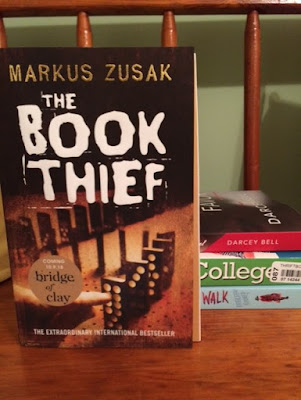
The Book Thief: Markus Zusak

The Book Thief: Markus Zusak
Genre: YA Historical
Published: 2005
Pages: 550


Currently Reading (and quite possibly my next review):
At the start of World War II, Liesel's life turns upside down. First her brother dies, then she is separated from her mother and sent to live with a foster family. Life isn't always easy, but when her new papa teaches her to read, she finds solace in books that she steals. 

Then her family decides to hide a Jewish man in their basement. Soon they bond over the power of words and tell stories together in the dark corners of their house. As the war descends and life gets darker, it's the power of storytelling that saves them all. But as Liesel will find out, words also have the power to destroy.


Boy, was this book all over the place in middle school. Every time a teacher did an independent reading check, it seemed like somebody was reading "The Book Thief." That among several books that were making the rounds. Fast forward to current times when the Great American Read is becoming a thing, and the novel has possibly even more interest than it did then. And there's a reason for it- the language and themes of the book make it a good pick for adult readers as well.

"The Book Thief" is most well-known as the story of a girl who steals books and whose family hides a Jewish man in their basement. However, it's a lot more than that. It's somewhat slow to truly get into as it focuses more on the character interactions as a whole. It assumes you already know the basic ins and outs of the Holocaust and doesn't go much in depth.

That doesn't mean life is easy. Liesel first deals with the death of her brother and is separated from her mother. Her foster mother isn't especially welcoming, but her new papa is, and teaches her how to read. There are bombings. Kids can be mean. Families are torn apart by war. So when she learns to read, she uses books as an escape.

But the only way to get some of these books is by stealing. And steal she does.

The idea of the power of words, for good and for bad, is talked about throughout. Max and Liesel work together to draw and write stories on the walls of the basement, powerful stories that undo Hitler's power (at least in their minds). Throughout the course of the novel they become unlikely friends, but this is just one part of her story. Liesel struggles to maintain a normal life- Hitler Youth meetings, soccer on the street, and stealing, while concealing her secret. A considerable part of the tale is just struggling to find joy in life. Zusak actually incorporates the pages from the stories that Max and Liesel create inside the story. Everything down to the illustrations and text looks downright authentic.

Someone else also has a story to tell- Death. Yes, Death is the narrator and is able to approach everything from his own perspective. (I found it interesting that Zusak chose to make Death a male.) Mostly he is amazed at the power of human evil. But he also appreciates the acts of goodness. Liesel's papa, for example, gives bread to a Jewish prisoner marched through their street. He pays for it dearly, but the act does not go unnoticed. Liesel, too, isn't fond of what is going on and is more than happy to befriend Max. You could argue that his language gets a little pretentious or literary once in a while, but his message is clear: humans can be amazing in more ways than one. I didn't like, however, how he was constantly spending time talking about what "was going to happen later." Let us get there!

Speaking of kindness, I was pleasantly surprised at how much there was of it. Even in Nazi Germany, there were people willing to lend a hand. Take the mayor's wife, who lets Liesel visit her library. Her slippers are decked out in swastikas but yet, there is kindness hidden away somewhere (probably because she is German, but still). The kids drop bread on the path for the Jewish prisoners. Everyone comes together during the bombings and listens to Liesel read her books. It's an inspiring sense of community and perspective that you don't always hear about in books that take place during this time period. Just because you weren't a Jew doesn't mean you were having an easy time of things...not that I excuse the hateful attitudes displayed by some in the book.

Yes, it's a devastating book, but it's worth reading. That includes adults. I especially love how free this book is of traditional YA tropes. There is no romance or love triangle to speak of, although it can be argued that Liesel loves Rudy and many others. Of course, it also includes a message that applies to everyone- words are powerful.


Also a SPOILER ALERT regarding the ending (highlight the space below):
Ah, the bomb. I almost forgot to address this until I saw it mentioned in another review. Normally one thing I don't like to see is the writer ending their book by literally or figuratively dropping a bomb on everyone. It usually means that they can't think of an ending, and then there is no true conflict resolution. But this is wartime and it certainly packs an emotional punch. There also isn't a clear structure to this story, so I can understand why something like that might have happened to end things. And again, it also shows the deadly impact that words can ultimately have. 


4 stars


Saturday, September 1, 2018

Your Complete Guide to Being a Potterhead

It's September 1, which means one thing...time to go back to Hogwarts!

I first got into Harry Potter in third grade. Our parents were supposed to read to us every night for fifteen minutes, and we decided on Harry Potter. My sister joined us, and because the weather was improving, we would often sit on the glider on the back deck as the sun was going down. I then became a fan. I would bookmark every Potter website I could find and looked forward to the movies.


These days I'm not as much of a Potterhead. Unpopular opinion: I'm okay with not having my Hogwarts acceptance letter. I like my Muggle life just fine, I don't need magic. I don't do roleplay or conventions. None of that, ever. I did go to a book signing once, but those days are in the past. And I just can't get into the fanfiction whatsoever- too much icky weird stuff there. But I do like the books, just not regularly anymore.

New to the Harry Potter fandom? No biggie. Even if you're a Muggle, need a refresher, want to understand a reference, or you just want to get started, now you can. Dive in!


First, here's a brief rundown on types of people you'll see:

A Muggle is a term for a non-magical person.
A Squib is someone born to magical parents who shows very little magical ability. Filch is one, and Neville seems to be close.
A pure-blood is someone who is purely wizard. According to Voldemort, they are the only acceptable type of wizard.
A half-blood is someone with non-magical lineage somewhere in the family. Harry is one.



Book One: The Sorcerer's Stone 
Young Harry Potter receives a letter one day- er, many actually- telling him of his acceptance to Hogwarts. Living with his cruel aunt and uncle, this is hard to believe especially as they forbid him to go. However, life has other plans and soon he's learning about magical sports, taking strange classes, and even making some friends and enemies. But there's also a dark destiny that's waiting for him, and he'll prepare to meet the dark force that killed his parents.

It's definitely the lightest book of the series as Harry learns the ups and downs of wizard life. Hypothetically, it could stand on its own if you decided not to continue the series. The first 40% is just Harry trying to escape his family's tyranny, but then he becomes the youngest player to join the Quidditch team, meets wacky professors, and even makes friends. And besides all this there is a mystery he is keen on solving: what is this mysterious Sorcerer's Stone and why is it at Hogwarts? Could someone be plotting to steal it?
Breakout Characters:
Harry, obviously. The Chosen One who isn't afraid to get into some trouble.
Ron Weasley, Harry's fiery-haired best friend
Hermione Granger, a smart busybody who soon becomes their friend
Hagrid, an unusually large man who is the caretaker of Hogwarts and becomes a friend to Harry
Neville Longbottom, a cheeky boy lacking bravery and wizard skill
Albus Dumbledore, an old quirky wizard in charge of the school
Lord Voldemort, an evil wizard who can't seem to die out entirely. He has a snakelike appearance leading people to make fun of his not having a nose.


Book Two: Chamber of Secrets 
Harry is excited to return to school but his friends haven't been writing to him. Was the whole thing a dream? Turns out a house-elf who is fond of him is hiding them away, in an attempt to stop him from returning. This elf knows that something terrible is about to happen. And he's right. When students start turning to stone, a plot to attempt to bring Voldemort to power that lies right inside the school is revealed. And the trio wants to figure out how to stop it before any more students are harmed.

In the meantime, be sure to enjoy more Quidditch and a stuck-up new professor who gives Harry advice about being famous. There's also a ghost in the girls' bathroom that provides some interest, and a ghost party as well.
Breakout Characters:
Dobby the house-elf
Lucius Malfoy, Draco's formidable father
Colin Creevey, a superfan of Harry's
Ginny Weasley, Ron's younger sister
Tom Riddle, Voldemort's former self


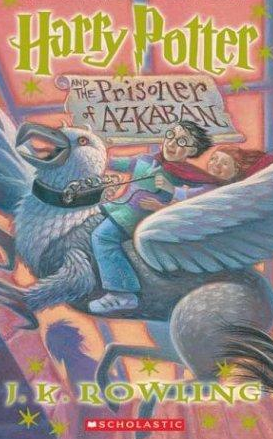
Book Three: Prisoner of Azkaban 
Someone is after Harry, no surprise there. But this time it's the guy who had betrayed Harry's parents to Voldemort. Nobody knows how, but somehow he has escaped from Azkaban prison and has even managed to get inside the school. But is all as it seems?

This book is noted for the lack of Voldemort appearances. But it's probably my favorite for the balance of dark mystery, interesting school events, and plot twists. Among the most interesting are Harry's attempts to visit the local village (his uncle didn't sign the permission form), Divination classes, and highly exciting Quidditch season.
Breakout Characters: 
Sirius Black, an old friend of the Potters
Peter Pettigrew, another old friend of the Potters
Professor Trelawney, the Divination professor who likes to predict death
Remus Lupin, a seriously cool Defense professor


Book Four: Goblet of Fire
Can Harry's life just be normal for once? This time around he's found himself entered into a competition, the Triwizard Tournament, that's supposed to be for wizards over seventeen. He must face 3 complex and difficult challenges throughout the course of the year as he figures out why in the world he's in this thing.

Meanwhile, don't forget to take time to enjoy the Quidditch World Cup and read about tabloid drama, Ron's jealousy at Harry achieving more fame, Hagrid struggling with prejudice, and first interests in girls. You'll also enjoy the arrival of other wizarding schools. Hermione also starts a legendary campaign to stand up for the rights of house-elves.

Breakout Characters:
Cho Chang, Harry's love interest
Cedric Diggory, a handsome Hufflepuff and the other Hogwarts competitor
Mad-Eye Moody, a retired Auror returning to Hogwarts to teach


Book Five: Order of the Phoenix
The wizard government refuses to comprehend that Voldemort is back-so do many of the wizarding world- and thus sends one of their staff to silence Harry. This staff member is a particularly nasty Defense Against the Dark Arts teacher who refuses to let them practice any defensive magic. At the same time as a group of their parents and teachers rekindle their old defense organization, Harry and the gang form one of their own where he teaches them the defense they need to know, both for exams and in the real world. In the meantime Harry tries to find ways to alert the world of Voldemort's return. At the end of the book, everyone is finally forced to accept the hard truth: Voldemort is back.

Many people consider the new professor to be the most evil character of the series, so this is not a book to be missed. Everyone goes after her in subtle ways, including the teachers. There's not a lot of subplots here, unless you want to consider the surly house elf at the Order headquarters or a budding romance for Harry.
Breakout Characters:
Luna Lovegood, an odd dreamy girl they meet on the train to Hogwarts
Professor Umbridge, the horrid new Defense teacher
Bellatrix Lestrange, an evil witch and Sirius' cousin


Book Six: Half Blood Prince
Dumbledore recruits a professor who he believes holds the key to defeating Voldemort. When Harry obtains this information, he and Dumbledore go on a mission to learn more about Voldemort's past, which will contain answers as to how to defeat him.

Talk about growing up with a book series: there's a lot of teen drama here. Love occurs, fights occur. Everyone learns to Apparate, or get from one place to another instantly, and goes to socials held by said new teacher. Also, when Harry obtains a used Potions book from the "Half Blood Prince" and suddenly becomes good at the subject, the gang tries to find out who the Half Blood Prince might be (I mean yeah, this book doesn't have the most accurate title as this is mostly a subplot but you know). Oh yeah, and your opinions on Draco might change entirely.
Breakout Characters: 
Lavender Brown, Ron's over-the-top love interest
Professor Slughorn, new teacher with a dark secret


Book Seven: Deathly Hallows
This is "that camping book" you hear so much about. Harry is no longer safe at Hogwarts and leaves with his friends to go destroy Horcruxes, the items that hold pieces of Voldemort's soul to keep him
immortal. Meanwhile, the trio learns of a legend where one must collect 3 items to become the Master of Death and Harry aims to collect those as well.

This is not the happiest of books, but the ending makes everything worthwhile. You'll be with the characters the whole time, rooting them on as they move around and even camp out to stay in hiding. And there are still lots of magical moments. I like the part where Harry visits his parents' graves and the part with Dumbledore. But the battle scenes are great too, especially seeing everyone defend Hogwarts.


Hogwarts students are sorted into a house upon their first arrival. Each house has a dormitory and a table in the Great Hall. You earn points for your house by doing good, though rulebreaking loses you points. It all comes down to the House Cup at the end of the year. This is what people take so seriously! Which house suits you?

Gryffindor: The house where the big 3 characters are in. If you're brave and chivalrous, this is the place for you. Their ghost is Nearly Headless Nick, named for obvious reasons, and the Head of House is Professor McGonagall. 
Ravenclaw: Known as the "smart house," this is where you'll be if you value cleverness. It's argued that Hermione should be here, but the Sorting Hat clearly had its reasons. The house values "wit and learning," and their ghost is the Grey Lady. 
Hufflepuff: If you're just and loyal and unafraid of toil, congratulations, you're a Hufflepuff. This is J.K. Rowling's house. Their ghost is the Fat Friar and their Head of House is Professor Sprout. 
Slytherin: It's gotten a bad reputation over the years due to its love of pure-bloods (part of Voldemort's regime was trying to eradicate those who weren't). It's certainly not an evil house, especially these days. They value cunning and ambition The Bloody Baron is their ghost. Severus Snape is the Head of House for the most part, until Slughorn takes over.

While we're on ghosts, I should also mention Peeves the poltergeist. He doesn't appear in the movies but is beloved by readers for his wacky antics and love of troublemaking. He is forever loathed by caretaker Argus Filch, although the Bloody Baron can supposedly control him.


School typically starts on September 1st. They get a letter before that with books and supplies they will need, usually obtained in Diagon Alley, the little wizard downtown area if you will. On that date, students report to King's Cross station and run through the wall between platforms 9 and 10. This takes them to Platform 9 3/4, where the Hogwarts Express waits to take them to school. The first years take boats across the lake with Hagrid, while everyone else rides in carriages. Before the opening feast, the Sorting Ceremony takes place where each new student tries on a talking hat and is sorted into one of four houses.

Students traditionally take Transfiguration, Charms, History of Magic, Potions, Herbology, Astronomy, and Defense Against the Dark Arts. First years also have flying lessons. In the third year they may begin Care of Magical Creatures, Arithmancy, Divination, Muggle Studies, and/or Ancient Runes. Fifth year O.W.L. exams dictate what subjects they can continue in the sixth year, while N.E.W.T.s are taken at the end of the seventh.

Many evenings might be spent doing homework, but students might also like to hang out at their house common area. On weekends, third years and up may also visit Hogsmeade, the local village. Quidditch matches between Houses are certainly one of the most anticipated events as well.

A quick guide to your known professors:

Transfiguration: Professor McGonagall (strict but fierce)
Potions: Professor Snape (loathed by many) and Professor Slughorn
Defense Against the Dark Arts: Professors Quirrell, Lockhart, Lupin, Moody, Umbridge, Snape, and Carrow. The position has been jinxed since Voldemort didn't get it--nobody since has held it for more than a year.
Astronomy: Professor Sinistra
Herbology: Professor Sprout
Charms: Professor Flitwick
Divination: Professor Trelawney and Firenze
Arithmancy: Professor Vector
Care of Magical Creatures: Professors Kettleburn and Grubbly-Plank; and Hagrid
Flying: Madam Hooch


What types of things might one need to become a successful witch or wizard?

Broomsticks: Great for getting around, and also for playing Quidditch. They come in many models, the Firebolt being the best.
Floo powder: Toss some of this into your fireplace, clearly state the name of where you want to end up, and you will be transported there. But speak clearly!
Invisibility Cloaks: Don't count on seeing a lot of these; Harry just inherited one from his father. They do come in handy though.
Remembralls: These little glass balls glow red when you've forgotten something.
Time Turners: Very hard to obtain from the Ministry of Magic, awful things can happen when you use one. Hermione is able to responsibly use one to handle her course load.
Wands: They can be crucial to your success. Always remember that the wand chooses the wizard, so you'll know when the choice is right for you. You can also stick out your wand hand to summon the Knight Bus, which can take you anywhere you need to go, but be careful, it's a bumpy ride.
Wizard Chess Sets: Just like regular chess, but the pieces move by themselves. Definitely bring one to Hogwarts; Harry and Ron certainly enjoy it. Gobstones and Exploding Snap are other popular games.


Quidditch is the legendary broomstick sport of the wizarding world. Many places in the real world have adapted it for real play, with players running around rather than flying and a fast runner acting as the Snitch.

The goal is to score the most points. Players known as Chasers try to get a large ball known as a Quaffle into one of the three large hoops on the other team's field, while it's the Keeper's job to stop them from scoring. Meanwhile, there's a tiny, fast golden ball flying around which must be caught by one team's Seeker to earn them 150 points. This usually wins them the game (unless the other team still has more points after it is caught) and ends it. To add an element of danger, Bludgers fly around and try to knock players off their brooms. Each team has two Beaters responsible for knocking the Bludgers away from players or into opposing ones.

Quidditch is a big part of Harry's life. It was discovered early on that he was a talented Seeker and he joined the team. Ginny also spent time as a Seeker and Chaser, while Fred and George were Beaters. Ron even became Keeper later in the series. However, as the books become darker Harry spends even less time on the Quidditch field. Games are played against House teams and wins earn House points. There are also professional leagues with large followings.


Many creatures abound in the wizarding world. Here are just a few:

Centaurs: Half-human, half-horse, these creatures are prideful. Many don't want to associate with humans. When one of them left the herd to teach Divination, he faced rejection.

Dementors: Not very magical at all. They basically appear as a type of black ghost with rotting, corpselike flesh underneath. They guard Azkaban, the wizarding prison, and can suck out one's soul. The victims are worse off then they would be if they were dead.

Dragons: There are many varieties. Harry battled a Hungarian Horntail in the Goblet of Fire. But Charlie Weasley can tell you about any of them- he handles dragons for a living.

Grindylows/merpeople: Imagine a demonic mermaid and this is basically what you get.

Hippogriffs: these animals, looking like large birds, want respect. They are to be bowed down to, without blinking. If they're willing to approach you they may even let you ride them.

Thestrals: These invisible horses can only be seen by people who have witnessed death. They pull the carriages that take the students to the school.

Unicorns: Their blood is valuable and can extend your life, but at a price. It's one of the things Voldemort was after. They prefer to be approached by girls rather than boys.

Cats, rats, and toads are the traditional pets of Hogwarts students. Famous pets include Neville's toad Trevor, Hermione's cat Crookshanks, and Ron's rat Scabbers. And of course, there's Harry's owl Hedwig. Owls are especially useful, even if they're not used as pets, because students can use them to deliver and receive mail.


Here are some of the biggest debates that surround the fandom. Decide for yourself where you stand...that is, preferably after reading the books.


Dumbledore: good or bad? Many fans have criticized Dumbledore for various reasons, including but not limited to his past. His love of power when he was young led to a tragic event, and one can argue that his plans for Harry weren't good either. He's not perfect, but I don't think he's a bad guy. 

Snape: good or bad? The jerky Potions professor only likes a couple of his students. But he also takes on the ultimate role as a double agent. Once you figure out what side he's on, it can still be challenging to determine if he's a good guy. Again, Snape isn't perfect and I think to truly be a good character he would have treated Harry better, especially because his mother was her love interest. And he wouldn't have bullied his students.

Movie Ginny vs. Book Ginny Many fans state, understandably, that movie Ginny doesn't really do that much as a character. Book Ginny is definitely more developed and her romance is more interesting. Still, she comes across as a bit too perfect and the movies don't portray her that way as much.

Harry's Career: Harry ultimately becomes an Auror, someone who catches Dark wizards for a living. But many people feel that he would have been better as a Defense Against the Dark Arts teacher. After all, he was probably tired of hunting down Dark wizards-which he really didn't want- and he would have been a great teacher. Or perhaps he was an Auror for a few years and then became a teacher. Let the fans decide.

Love triangles: Should Harry end up with Ginny or Hermione? Ginny is the popular answer, but this is still up for debate. It's also said that Hermione should end up with Malfoy or Fred, but this blogger strongly disagrees with those opinions.


Diehard Potter fans like to go to other places around the internet and share in the Potterpalooza. My computer is currently not allowing me to post YouTube links, but check them out for yourself.

Potter Puppet Pals: These wacky skits show the Potter gang at their worst. Character flanderization is through the roof. Corny-ness abounds. But they're amazing. "The Mysterious Ticking Noise" is a must-see, and be sure to check out the silly fan-made cartoons as well.

A Very Potter Musical: I haven't seen this one but I've heard it's popular.

The Leaky Cauldron and Mugglenet are also popular websites for your Potter needs.


This is a basic guide, but you'll find a lot more secrets tucked amongst the pages. Why not give the books a try if you haven't already?

Thursday, August 23, 2018

A Simple Favor: Darcey Bell

A Simple Favor: Darcey Bell
Genre: Thriller
Published: 2017
Pages: 298


Currently Reading (and quite possibly my next review):
Wealthy PR director Emily and mommy blogger Stephanie are best friends. So when Stephanie goes to pick up Emily's son from school, she thinks nothing of it. But then Emily disappears, and Stephanie finds herself filling in to help take care of Emily's family. Maybe there was more to this "friendship" that she realized.

But is Emily really gone for good? Or does she have bigger plans? That's what she thought at first. But unfortunately, plans go wrong, and soon her original plot becomes one to get revenge. 


Reviewing a thriller is always challenging because there are details that shouldn't be revealed. But I shall try my best. 

I'm going to warn you that you won't find many likable characters here. Stephanie disgusted me, especially in the first half of the book. She has affair after affair. She's a compulsive liar. When she meets her half brother, she meets him at a motel that same day. Yeah, her half brother, who's visiting to mourn the death of their father. I wondered for a while if she was the antagonist...but then we meet Emily. She's an odd character who is just intense and then whose thoughts suddenly stray from "wanting excitement" to wanting people killed...and then she shows some signs of remorse. Maybe. Seriously, she goes from stealing her mother-in-law's ring to wanting her husband dead. Boy, that escalated quickly...It's hard to know what to think of her. At first, both appear to be decent people. They have families and kids they adore. Of course, Stephanie has her secrets but ultimately the subplots about her dad and half brother really didn't contribute to the story. (Sigh. More moping about missing fathers.) Come to think of it, Emily was also supposedly estranged from her parents, but I don't recall learning why. 

A lot of side characters border on cliche, though. There's the housekeeper-who's Spanish of course-and frequently inserts Spanish words into her speech, particularly "senora" for "woman." Really? There's also incompetent law enforcement and a victim who's way too trusting for her own good- perhaps to move the plot along. This book could have ended very easily if she had just used common sense. Then there's Emily. She's rich and successful but is also unsatisfied. Oh, and then there's a secret twin. If you've read the genre you've probably seen a lot of this before. And of course, we watch Stephanie move in to Emily's to "help out" with her son Nicky. It's not hard to guess what comes of this.

The story itself was the strongest part. Three different characters have a chance to speak- Stephanie, Emily, and Emily's husband Sean. There are also some of Stephanie's blog entries in the mix. They serve to give you a feel of Stephanie's blogging lifestyle, but other characters also read it and use it in ways to evaluate their own lives. Stephanie isn't a traditional mommy blogger who writes pages of sponsored posts- actually, I don't know many mommy bloggers who straight-up blog about their lives like she does. Either way, it's interesting and an important vehicle to drive the plot forward. And refreshing- I don't like how commercial blogging is becoming! The language of the blog did feel a little formal and poetic though. 

I also liked the alternating POVs which allowed us to see things from lying characters' perspectives, leading to insanely unreliable narrators. You know what exactly is happening (if you're good with reading comprehension), but other characters do not. Of course since there's no real ending, the lies never get explained to them so nobody learns anything, or faces consequences. More on that in a bit. The idea was also well-thought out. I did find Sean's taking out a life insurance policy to be trite; same thing for the characters pointing out "oh look, this is just like a horror movie!" Eyes will roll. 

But there are issues. Not too long ago I wrote a post on some of my biggest pet peeves in recent book trends. One of them, #4, was a vague ending. The lack of an ending can singlehandedly ruin a book for me. Otherwise, what is the point of the story? I read because I want to know what happens! And sometimes when you're reading and the pages are slowly dwindling and dwindling, you worry because there's not enough time to resolve anything.

This really bothered me because a lot of the truth had yet to be exposed to the victimized characters. Emily's husband didn't get much of an ending at all. Neither did Stephanie. There's all this buildup leading to the consequences of Emily's doing in their life, and then we don't get to find out what happens. As a matter of fact, I don't think either of them ever found out the truth. I'm sick of authors deciding to leave us high and dry just so they can convey an artsy feeling of foreboding. Judging by her picture, it looks like Bell may be a hipster, so that may very well have been the effect she wanted. I don't know. I like closure in my books. And an ending. When I buy a novel, I trust the author to tell me what happens. It's not a fill-in-the-blank writing prompt book. 

That said, the ending is somewhat exciting. Unfortunately it's basically stolen from a famous movie (which I knew before the author explicitly pointed this out. Again, eyes will roll). Still, most of the subplots don't go past the climax and that left me disappointed.

Verdict

It's hard to know what to think of this book. A Simple Favor kept me turning pages because I wanted to know what happened, but that didn't turn out so well. I didn't like the characters, but I also thought that having super-flawed people was an interesting new angle. Still, you might find yourself wondering...do I really know my best friends? Just don't go into it expecting too many twists or many answers.


2 stars